
QuickTake: Lease buyouts and subleases
What happens when tenants restructure
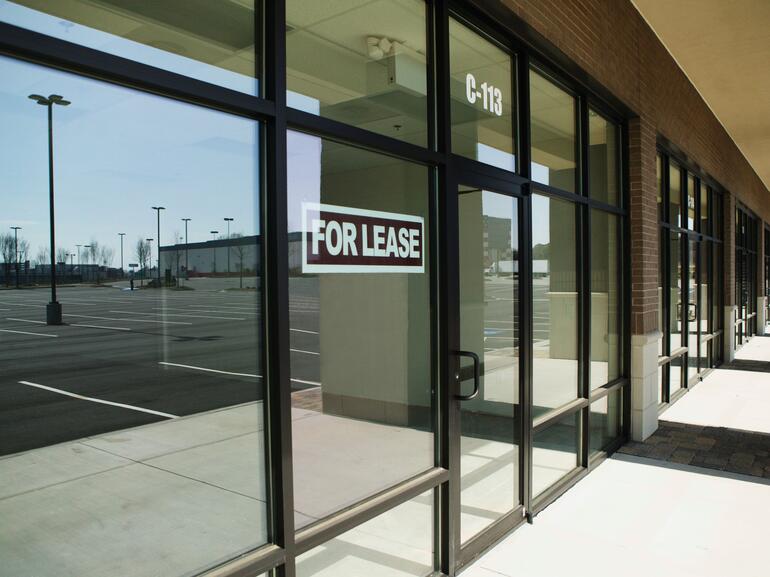
Retail closures trigger real questions for landlords
When retailers pull back, landlords want to know what happens next and how much control they actually have. Walgreens is the latest to scale down, joining Rite Aid, JoAnn and Party City in trimming weaker sites and reshaping portfolios. We spoke with Bryn Feller about how these moves unfold and how owners can stay ahead of them.
Fact 1: Not every store closure means default
When a tenant goes dark outside bankruptcy, the lease usually stays active. Many tenants look for an early exit through a lease buyout, often settling at 40 to 65% of the remaining obligation. Pharmacies and dollar stores have been active in these lease restructurings, especially at sites that do not sublease well.
A lease buyout or sublease typically hinges on two elements: the rent gap and the remaining term.
Sublease when the rent gap is small
Scenario: Long remaining term (about 5–8 years) and little-to-no spread between in-place rent and market rent.
Example: In-place rent at $12/SF vs market at $15/SF on a 14,500 SF pharmacy box.
If the subtenant doesn’t need meaningful TI, sublease rates often land close to a straight pass-through.
Buyout when the rent gap is meaningful
Scenario: In-place rent materially exceeds market rent and no replacement user is lined up.
Example: In-place $22/SF, market $14/SF, 14,500 SF, seven years remaining.
Annual rent stream about $319,000. Nominal remaining rent about $2.23 million.
To reach roughly a 25% tenant IRR on avoided rent, buyouts typically settle between 45 and 55% of remaining payments, or about $1.0–1.2 million in this scenario.
Rule of thumb for lease restructuring
- No subtenant and a meaningful rent gap points to a lease buyout
- Long term and minimal rent gap points to a sublease
- Buyouts outside bankruptcy commonly price at 45–55% of nominal remaining rent
- Always check no-go-dark language, assignment rights, sublease rights and who guarantees the lease
Fact 2: Closures inside bankruptcy follow a different playbook
Once a tenant files Chapter 11, lease restructuring moves to the court. Tenants can reject leases on unprofitable stores, ending rent obligations at those sites and using the process to reset stronger locations. It is rarely a full exit. Large filings usually affect 10 to 30% of leases.
During Rite Aid’s 2023–2024 case, roughly 12% of leases were rejected. Many landlords recovered 60 to 80% of scheduled rent through backfilling or negotiated outcomes.
Timing matters: Bankruptcy calendars move fast. Early outreach and a ready replacement plan narrow downtime and improve recoveries.
Fact 3: Informed ownership responds faster
Closures are a normal part of managing a retail portfolio. The difference is how quickly an owner can act when a tenant begins restructuring. Feller recommends keeping a “fail-safe playbook” for every property:
- Know the guarantor and lease mechanics
- Track unit performance and local market rents
- Stay in regular contact with store-level management
- Visit or check in locally at least every 90 days
A short lead on performance issues gives owners more options and more leverage.
Expert angle
The most informed landlords not only recover faster, they reposition assets on the front foot and use restructuring to match better users to the real estate. Strong entitlement notes and a clean site file help move quickly when a tenant signals change.
Practical checklist
- Confirm guarantor strength and assignment rights
- Track rent levels against market
- Pre-identify at least two viable replacement tenants
- Keep entitlement, parking and site work notes current
Closing takeaway
Retail closures are constant, but outcomes vary. Lease strength, rent gap, tenant credit and response time matter more than the closure itself. Owners who stay close to store performance and keep replacement plans ready are in the best position to turn a reset into an upgrade.
Get the report


Insights
Research to help you make knowledgeable investment decisions