
Apartment demand reaches three-year high in the Los Angeles multifamily market
Q4 2025
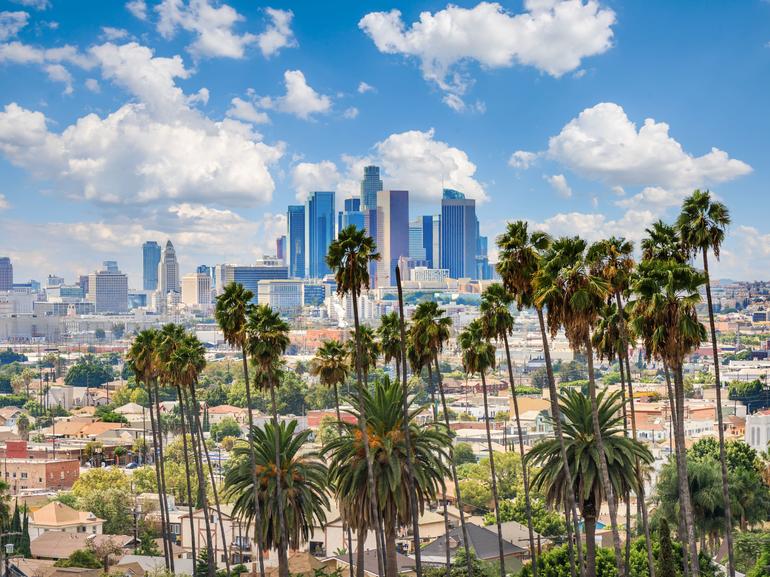
Greater Los Angeles multifamily market overview
Despite an annual uptick in vacancy and a decline in asking rents, a high-level view of the Los Angeles multifamily market reveals that conditions are generally stabilizing, supported by strengthening absorption. Demand has been improving, with net absorption reaching a three-year high in 2025. Apartments recorded net move-ins for roughly 5,600 units during the past year, but developers brought more than 8,600 units online during the same timeframe. Heightened deliveries led the vacancy rate to continue inching higher. Recent trends largely mirror those of previous years, though vacancy increases have stabilized in recent quarters. Since 2022, projects totaling 32,000 units have come online, yet vacancy has only risen by 100 basis points. During this period of supply growth, rental rates have flattened. Asking rents have remained within a $50 per month range since late 2022.
Multifamily investment activity accelerated in 2025, with total sales during the past 12 months increasing 52% from levels recorded in 2024. The surge in investment volumes did not result in any significant price movement, however, with the median price reaching $311,600 per unit in 2025, 2% lower than during the prior year. Pricing trends varied throughout the metro. Per-unit prices rose in the San Fernando Valley, ticking up 4% to $318,200 per unit. This area made up roughly one-third of sales in the region during 2025, with several transactions closing between $125 and $185 million. In 2024, the San Fernando Valley had only a few deals of this size a year prior. In the region’s most active submarket, Downtown, the sales mix shifted towards Class C properties during the past year. The changing mix of sold properties in Downtown resulted in a 49% decline in per-unit prices in the area from 2024 to 2025.
Looking ahead
Elevated multifamily supply growth will impact operating conditions in Los Angeles in the coming quarters. A significant share of new deliveries will be within the Downtown and West Los Angeles submarkets, with roughly 5,100 units and 1,200 units set to deliver respectively in 2026. Newer properties, especially those in lease-up, will face heightened competitive pressure. In contrast, more established properties and those in lower tiers should post flat rent growth, with operators prioritizing tenant retention to limit potential turnover. Market-wide asking rents will be impacted, but the resulting decrease in average rents is expected to be modest. Similarly, vacancy in Los Angeles is forecast to inch higher in 2026, with the year-end rate expected to remain within 20 basis points of current levels, reflecting the market’s proven resilience during years of elevated deliveries.
Sales activity in the Los Angeles multifamily investment market is expected to accelerate in 2026, although the transaction mix will likely continue to shift. The pace of sales for older, lower-tier properties is projected to gain momentum as they offer clearer opportunities for long-term income and value appreciation. Newly delivered projects may sell more slowly than in recent years, with developers electing to hold these properties for longer as lease-up and short-term rent growth both lag previously projected timelines. These patterns will all likely be much more pronounced in the Downtown and San Fernando Valley areas, whereas the South Bay and West Los Angeles are likely to remain closer to their typical transaction mixes. Cap rates may continue to rise in 2026 due to a greater share of lower-tier properties changing hands, though rates should be relatively stable within each property class.
Learn more about the Los Angeles multifamily market
Contact the experts in Northmarq’s Los Angeles office today!
Get the report


Insights
Research to help you make knowledgeable investment decisions