
Net lease is re-segmenting by credit, not asset type: Why credit durability is the new metric
Historically, investors segmented net lease properties by asset type — retail, industrial, medical. Today, that framework is being replaced by a sharper focus on credit durability and cash flow visibility. This shift reflects a more selective market, where tenant strength and adaptability outweigh traditional metrics like lease length or asset type. For net lease investors, understanding these changes is critical to navigating the evolving landscape.
What’s changing in net lease investments
From asset type to tenant credit
The old shorthand of categorizing net lease properties by asset type is no longer sufficient. Investors are now evaluating tenants with the same rigor as a stock or bond trader analyzes a company. This includes assessing tenant solvency, market trends and even how rents compare across the country for the same tenant. For example, instead of comparing a Dollar General in suburban Chicago to other local retail properties, investors are benchmarking it against Dollar General rents in similar suburban markets nationwide.
Winners and losers
Public credit operators with declining margins, like Walgreens and Kohl’s, are being penalized due to high debt and operational challenges. Conversely, companies like Tractor Supply and AutoZone are thriving, thanks to low debt and strong revenues. On the private side, regional convenience store operators and industrial supply companies with strong balance sheets are emerging as attractive investment options.
Lease term alone isn’t enough
While lease length remains an important factor, it no longer guarantees protection. Now, investors are prioritizing tenant strength over lease term, recognizing that even a long lease with a weaker tenant can lead to challenges like vacancies or re-tenanting costs. Cash flow visibility, including rental increases that keep pace with inflation and fair market value resets during option periods, has become a critical metric.
Why this shift is happening
Weaknesses in “safe” categories
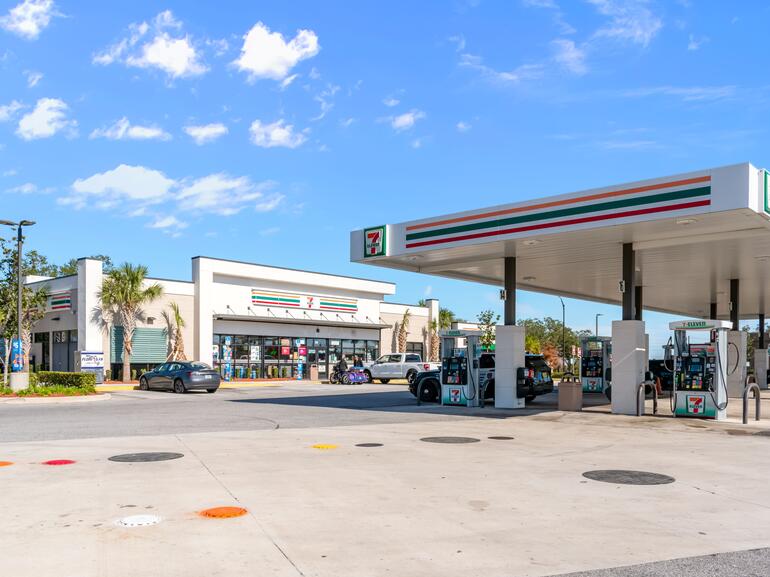
Higher interest rates and inflation have exposed vulnerabilities in traditionally “safe” net lease categories. Some quick-service restaurants (QSRs), for example, are facing challenges as deals become harder to pencil out. Lower-priced QSR deals are still moving, but primarily because cash buyers dominate this segment. Meanwhile, convenience stores like 7-Eleven remain attractive due to their strong fundamentals and bonus depreciation benefits.
A new lens for risk
Investors are rethinking risk assumptions tied to asset type and lease length. Now, they are scrutinizing unit-level economics, tenant adaptability and resilience. This shift reflects a broader understanding that tenant strength and property performance are paramount in today’s market, along with what a tenant’s “true occupancy cost” is in that space.
A step-by-step guide for evaluating tenants
Below is a practical framework for investors to properly evaluate a tenant in today’s selective market:
- Understand the tenant’s financial health
Look beyond the surface. Assess the tenant’s solvency, debt levels and revenue trends. Public credit isn’t always safer. Private credit operators with strong fundamentals can often be better investments. - Analyze rents and market trends
Compare rents not just locally but nationally for the same tenant type. Ensure rental increases during the lease term align with inflation and that option periods include fair market value resets if rents are below market. - Evaluate individual property performance
Examine the specific location’s performance metrics, including sales ratios and occupancy costs. Consider the residual value of the real estate and its suitability for future tenants. For industrial assets, some highly specialized buildings may not be suitable for other tenants, while others may be more flexible or versatile for alternative uses. - Consider tenant adaptability
Assess how well the current tenant can weather macroeconomic challenges like inflation, tariffs and shifting consumer trends. Resilient operators with strong unit economics are better positioned for long-term success. - Identify overlooked opportunities
Explore niches like regional convenience stores, auto body shops, car washes and industrial outdoor storage. These often-overlooked segments can offer strong returns and bonus depreciation benefits.
Selectivity is the new strategy
The net lease market is no longer a defensive investment category. It’s a selective one. Investors must move beyond traditional assumptions about asset type and lease length to focus on credit durability, cash flow visibility and tenant adaptability. By following a disciplined evaluation process and exploring overlooked opportunities, investors can position themselves for success in this evolving market.
Get the report


Insights
Research to help you make knowledgeable investment decisions