
Evaluating federal government lease stability: Opportunities and insights for CRE owners and investors
Commercial real estate (CRE) investors have long regarded federal government lease stability as a foundation of predictable returns. Federal leases were seen as reliable, long-term agreements that bolstered CRE investment strategies and elevated property values in core markets like Washington, D.C. However, a new wave of federal lease terminations in 2025 disrupted this sense of security, forcing investors and stakeholders to rethink risk across the sector.
Driven by aggressive cost-cutting and workplace consolidation efforts, the rapid exercise of early termination options (ETOs) exposed vulnerabilities that were previously underestimated in CRE underwriting. Investors whose leases were canceled witnessed a material impact on property valuations, net operating income (NOI) and the performance of securitized products – transforming government tenants from perceived safe havens to active sources of exposure.
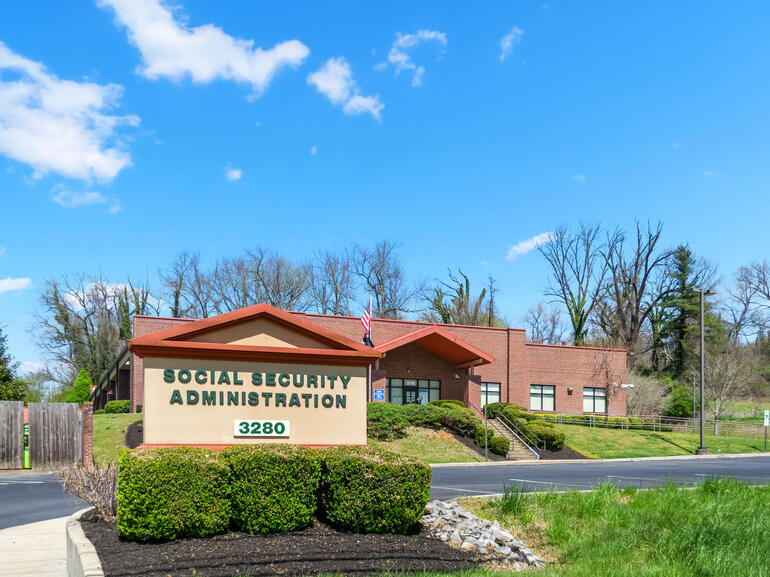
While recent federal lease terminations have sparked a re-examination of risk in some regions, it is equally important to highlight that many federally leased properties – particularly those leased to the GSA for agencies such as the following – remain highly sought after by investors as they typically serve local or regional communities and are considered essential services.
- Department of Homeland Security
- Social Security Administration
- U.S. Department of Agriculture (USDA)
- National Park Service
- Bureau of Land Management
- Drug Enforcement Administration
- Department of Health & Human Services
In many markets, government-leased assets with long lease terms remaining continue to demonstrate strong yield profiles and attract significant demand. With the right diversification strategy, these properties can be excellent additions to an investor's portfolio and are a bright spot for sellers seeking to bring attractive listings to market.
Understanding the federal lease termination shock
For decades, the commercial real estate market operated under the assumption that federal government leases were among the most secure investments available. The U.S. General Services Administration (GSA) as a tenant was considered a gold standard, promising stable occupancy and reliable cash flow. This perception was altered with the emergence of federal lease risks in 2025, when a new federal initiative, led by the Department of Government Efficiency (DOGE), resulted in the cancellation of hundreds of leases. This policy shift triggered widespread early termination options, upending the belief that such clauses were merely dormant.
According to the research report, "Pricing Government Contract Risk Premia: Evidence from the 2025 Federal Lease Terminations," published by Rochester Institute of Technology’s Steve Choi and Yale’s Cameron LaPoint, the scope and impact of government lease cancellations on CRE in 2025 were substantial. Within months, office space totaling nearly 9.0 million square feet was affected by GSA federal buildings lease terminations as DOGE moved to consolidate the government’s real estate footprint. This immediate contraction sent shockwaves through financial markets tied to these properties, especially within the Commercial Mortgage-Backed Securities (CMBS) sector.
It's important to note, however, that impacted leases represented a small percentage of the overall GSA footprint. At year-end 2024, the GSA leased nearly 175 million square feet of office and industrial space across the U.S., with approximately 7,500 in-place leases. Our back-of-the-napkin math suggests that somewhere between 5% and 10% of GSA properties were affected, leaving the vast majority of GSA-leased assets untouched. DOGE’s evaluation of GSA leases remains ongoing, although the pace of termination announcements has slowed considerably and some terminations have even been reversed or rescinded.
Spillover effects and market vulnerabilities
While the 2025 federal lease terminations generated notable market discussion, the most substantial spillover effects were primarily concentrated in specific markets such as Washington, D.C., where federal tenancy is a defining feature of the local CRE landscape.
Data from Choi and LaPoint’s research noted that properties in close proximity to buildings with an early termination option notification in D.C. saw NOI decline by 10.1%, reflecting the unique interdependencies within that particular market. These effects are not indicative of the experience in most other U.S. markets, where GSA leases – especially for essential, community-serving agencies – have remained highly resilient and in demand. The exit of a large government workforce in D.C. has had a pronounced effect on local retail, other office tenants and overall submarket dynamics, but such outcomes have not been broadly replicated in markets outside the core cities most impacted by federal policy shifts.
Washington D.C. thus serves as a benchmark for understanding how concentrated federal tenancy can create regional vulnerabilities, but for the vast majority of investors, these risks have been far less significant. Many properties across the country continue to perform well, stressing the importance of distinguishing between unique local dynamics and the broader GSA-leased property market. Comprehensive risk assessment should consider the specifics of the asset, tenant mix and local policy climate, rather than assuming uniform outcomes across all government-leased CRE.
Strategic actions for CRE investors
Although risk varies asset to asset, the 2025 federal lease terminations have certainly reshaped investors’ perspectives on assessing commercial real estate risks. In this new environment, yesterday’s assumptions are no longer sufficient. A proactive and more sophisticated approach – grounded in understanding federal lease stability and its implications for property values – is necessary when navigating the uncertainties tied to government tenancies.
- Explicitly price government contract risk in CRE investments
A crucial first step is to recognize and explicitly price government contract risk, especially within securitized products like CMBS. The research report by Choi and LaPoint demonstrates that ETOs were historically perceived as dormant, meaning this risk was underappreciated and underpriced in many portfolios. Investors and lenders must now incorporate the potential for early termination into their valuation models, stress-testing cash flows against multiple termination scenarios and adjusting asset pricing accordingly.
- Enhance due diligence for government tenant properties
When evaluating GSA-occupied properties, CRE investors should look beyond the surface lease terms. It’s critical to analyze the specifics of early termination options, the tenant agency’s federal mission and the likelihood of future government consolidation efforts. Consider the property’s adaptability for private-sector tenants and its location within a resilient, diversified submarket. Properties with flexible uses and strong private tenant demand provide greater protection in case of a sudden vacancy.
- Diversifying tenant bases in CRE portfolios
Portfolio diversification is not a new concept – it’s a foundational risk management tactic. Building-level and portfolio-level diversification help insulate against shocks from federal lease terminations and spillover effects. Therefore, owners of buildings with significant GSA occupancy might consider aiming to attract and maintain a healthy mix of private-sector tenants within those multi-tenant properties. For portfolio managers, it’s important to balance federal lease exposure regionally and across multiple industries. This approach builds resilience and reduces vulnerabilities unique to geographic markets experiencing high federal tenancy.
A new paradigm for government lease risk
While the federal lease landscape continues to evolve, many GSA-leased properties – especially those serving as essential facilities for local or regional communities – have remained stable and in high demand. These assets, with long-term leases and substantial firm term remaining, are considered yield-producing bright spots for investors looking to diversify their portfolios. As owners of government-leased properties know, the gross lease structure and management intensive nature of these assets provide a strong risk-adjusted return relative to triple net lease investments.
The key for CRE investors is to focus on conducting rigorous due diligence and understanding the specifics of each lease. Properties with essential missions and strong tenant demand often demonstrate resilience, even amidst broader market shifts. With a thoughtful diversification strategy and an eye toward long-term government commitments, these assets can be excellent additions that help balance risk while supporting community needs.
CRE success ultimately belongs to those who adapt – leveraging the strengths of essential GSA-leased properties and approaching risk assessment with a strategic, opportunity-driven mindset. For sellers and owners in this segment, highlighting stability, occupancy and the indispensable services provided can help unlock value and attract buyers seeking quality assets.
Ready to strengthen your CRE investment strategy?
Connect with Northmarq’s local experts for guidance on adapting to CRE risks and navigating federal lease uncertainties in your region. Reach out now to explore tailored solutions for your portfolio.
Get the report

Insights
Research to help you make knowledgeable investment decisions