
Special report: Study of U.S. colleges and universities
Northmarq Fund Management Research
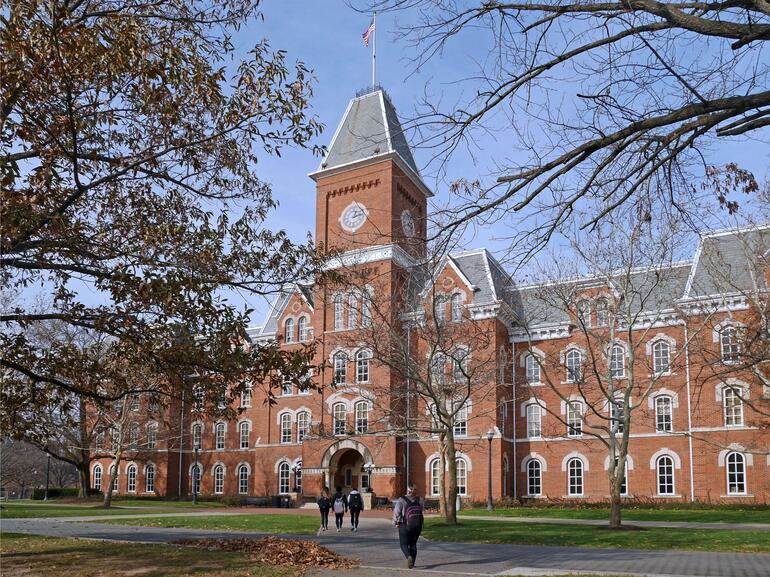
The first edition of this report was issued in 2020, as the pandemic was closing down in-person higher education. At the time, the industry was bracing for the headwinds of increasing fixed costs and demographic changes pointing to declining enrollment in the future. We initially embarked upon this project to determine what impact transformative forecasted trends of declining enrollment and forecasted decreases in revenue may have on local employment and to anticipate the positive or negative spillover to commercial real estate fundamentals.
We can now use this information to drill-down into specific employment markets to assist in underwriting real estate investments. In the process of this journey, we stumbled upon some ancillary observations regarding the status of higher education and have incorporated them into this report. We find that the intersection of college and university campus properties and investment portfolios and our skillsets as commercial real estate investors and advisors have interesting potential for collaborative benefit.
Higher education is facing numerous headwinds and cause for real concern, given declining enrollment, demographic shifts, potentially reduced government funding, and thin-to-negative operating margins. As we were updating this study, we noted the burn-off of Covid-era stimulus packages that held afloat many schools during that rough patch.
Today, additional federal funding is at risk for schools not complying with the policies of the new Trump Administration which could accelerate and exacerbate many of these economic challenges. Following our observations and general conclusions, we will propose a few real estate-centric ideas that may help institutions raise cash, deleverage balance sheets and preserve scarce resources for future growth and innovation.
Real estate strategies
The ground is shifting so much under the higher education industry that in the coming years we believe campus land and buildings will play an even larger role in operational strategies and financial health. In this new financial environment for higher education, colleges and universities may need to rethink their existing uses of facilities and find ways to maximize the financial returns of campus real estate assets. Some schools may find they have excess land or buildings and may need to consider alternative uses or monetization.
In certain cases, corporate partnerships may become viable strategies. Additional leases to complementary uses including biotech, R&D facilities, venture-funded tenants or young companies incubated by faculty or students could create income from real estate holdings. Schools could consider adding classes for on-campus business and nonprofit tenants as a supplement to traditionally enrolled students. Additional on-campus ventures could collaborate and cross-train with faculty in shared areas of expertise. Even some state, local or federal governmental agencies might be suitable co-habitants. Adding business, non-profit and governmental uses could create more hands-on career training and internship opportunities for enrolled students. Partnerships with business and outside entities may initially make some faculty and administrators uneasy, but all parties have an interest in building future leaders steeped in academic and practical experience relevant to their field of study. In an environment of surplus space, a diverse ecosystem of complementary occupancies could be a boon to colleges and universities in terms of stabilizing and diversifying revenue streams, righting balance sheets, and developing an even more energetic learning environment.
The sheer scale of land, buildings, and other forms of PPE is staggering. Excluding less-than-2-year institutions, for which comprehensive data is not available, the 2-year and 4-year schools had total 2023 property, plant and equipment of over $1.3 trillion, securing direct debt of $375 billion. The good news here is 27.4% leverage on average leaves room for borrowing, which may provide some financial flexibility and options for raising capital. Only 25% of schools show debt levels above 25%. Those few schools significantly above 50% debt entering this down trending period will be constrained in their ability to fund deficits going forward. For most schools, their land and buildings represent their largest financial assets, and it would be wise to work with objective real estate professionals such as those at Northmarq who can creatively evaluate and provide recommendations for maximizing operational efficiency and financial flexibility.
Please give us a call if you'd like to explore options for studying campus real estate optimization, freeing up liquidity, and/or redeploying capital into more diverse strategies.
Download the full report below.
© Northmarq Fund Management Research, September 2025. All Rights Reserved. Copying, selling or otherwise distributing copies and/or creating derivative works for commercial purposes is strictly prohibited. Although significant efforts have been used in preparing this guide, Northmarq and Northmarq Fund Management make no representation or warranties with respect to the accuracy and completeness of the contents. Northmarq and Northmarq Fund Management Research do not provide tax, legal, investment or accounting advice. This material has been prepared for informational purposes only, and is not intended to provide, and should not be relied upon for, tax, legal, investment or accounting advice. You should consult your own tax, legal, investment and accounting advisors before engaging in any transaction.
Get the report

Insights
Research to help you make knowledgeable investment decisions