
Outgrowing expectations: When perception trails performance
For much of our careers, Kansas City occupied a familiar place in commercial real estate. Investors valued the market for its stable cash flow, attractive yields and lower cost basis than many of the country's faster-growing metros.
Markets don’t stand still.
Over the past decade, we've watched that story evolve. New employers invested in the region. Existing companies expanded. Neighborhoods matured. Developers delivered increasingly sophisticated apartment communities, and renters proved there was demand for them. No single project transformed the market. Momentum built over time, gradually reshaping how investors viewed Kansas City.
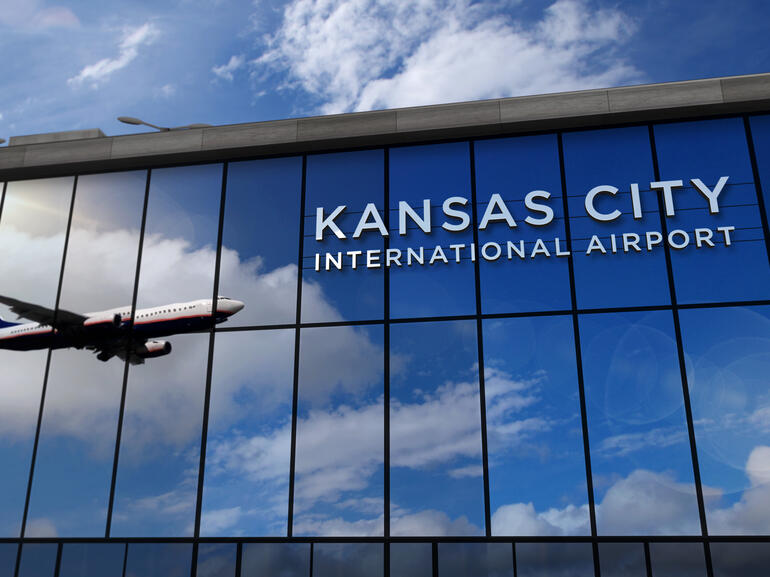
We felt that shift in a surprisingly ordinary place: Kansas City's airport.
When the city opened its new terminal in 2023, it felt like Kansas City had caught up with itself. The arrival experience reflected the confidence and momentum we had already seen through conversations with clients, property tours and transactions. The terminal became a visible reminder of changes that had been building across the market for years.
Since then, we've found ourselves returning to that moment. It reminds us that markets often evolve gradually while perception takes longer to catch up. By the time the broader investment community embraces a new narrative, local fundamentals have often been pointing in that direction for years.
Kansas City is one example. More importantly, it offers a framework for recognizing the next one.
Kansas City’s evolution: The signals behind the story
Demand
3,100 net move-ins in 2025, the strongest year since 2021.
Development
4,114 apartments delivered in 2025, with 7,048 more under construction.
Capital
42 multifamily investment sales transactions in 2025, nearly matching the recent peak of 43 in 2022.
Performance
Asking rents increased 1.5% in 2025 even as vacancy rose 70 basis points to 7%, reflecting continued renter demand amid elevated deliveries.
Recognizing a market in transition
Investors often look for the moment a market changes. We've found that markets build momentum over time.
The shift becomes visible through dozens of small signals. Client conversations evolve. New development raises the bar. Expectations begin to change.
Another turning point came as luxury multifamily towers began leasing for more than $3 per square foot. Those rents had long been associated with larger, more established markets. As renters embraced those communities, it became clear Kansas City had reached a new stage of maturity. Developers responded with greater confidence, and investors took notice.
Conversations with investors shifted from whether Kansas City belonged on an investment shortlist to which neighborhoods offered the strongest opportunities, how new supply was being absorbed and where long-term demand remained strongest.
That progression is often one of the clearest signs a market has matured. Conversations become more nuanced as investors evaluate neighborhoods, product types and long-term fundamentals.
What the numbers tell us
Momentum continued into 2026
Kansas City's strong net absorption despite elevated deliveries demonstrates the depth of renter demand, while renewed transaction activity reflects growing investor conviction in the market.
In the second quarter of 2026 alone, Kansas City absorbed approximately 2,300 units against just over 1,000 new deliveries, pushing occupancy to 96.2%, above its five-year average. During that same period, 33 apartment transactions closed, compared with 32 transactions during the first two quarters of 2025.
Together, those trends suggest that Kansas City's growth is increasingly being driven by durable fundamentals rather than simply its historical appeal as a lower-cost alternative to larger markets.
Where opportunity still exists
The market may have matured, but that doesn't mean opportunity has disappeared. In many ways, the investment conversation has simply become more nuanced. Today's investors are spending less time deciding whether Kansas City deserves a place in their portfolio and more time evaluating where they can create long-term value.
Location matters more than ever
Not every submarket has evolved at the same pace. Investors are looking beyond broad market averages to understand neighborhood-level demand, employment drivers and the pipeline of future development.
Product selection has become more important
As the market has matured, newer communities, renovated assets and well-located workforce housing each offer different risk and return profiles. Understanding how those segments perform throughout the cycle has become more important than simply buying into the market.
Long-term fundamentals drive decisions
Interest rates, capital markets and economic conditions will continue to change. The investors who perform best are typically those focused on durable fundamentals rather than short-term headlines.
Case study: A conversation we’re having more often
Ten years ago, we spent much more time convincing out-of-market investors to underwrite Kansas City. The metro was considered a flyover market, often overlooked in favor of larger, more established markets.
Today, conversations increasingly center on which Kansas City submarket, which neighborhood and which asset. We've watched well-established firms, including Hamilton Zanze, Canyon View Capital, Timberland Partners and MLG Capital, enter the Kansas City market, experience success and continue acquiring assets.
That growing familiarity with Kansas City's fundamentals is one of the clearest indications we've seen that the market has matured.
Today, the conversation is more about where in Kansas City than why Kansas City.
The next opportunity may already be taking shape
We still think about that first walk through Kansas City's new airport terminal.
By the time the doors opened, the market had already been moving in that direction for years. We had seen it in conversations with clients, on property tours and across completed transactions. The terminal simply gave those changes a visible landmark.
Kansas City continues to evolve. The conversations we're having today are increasingly focused on where opportunities are emerging, how individual submarkets are performing and what the next phase of growth could mean for investors. Years from now, we may look back and realize the signs of that next chapter were already here.
Get the report





Insights
Research to help you make knowledgeable investment decisions