
The evolution of net lease investment sales: From specialized niche to institutional strategy
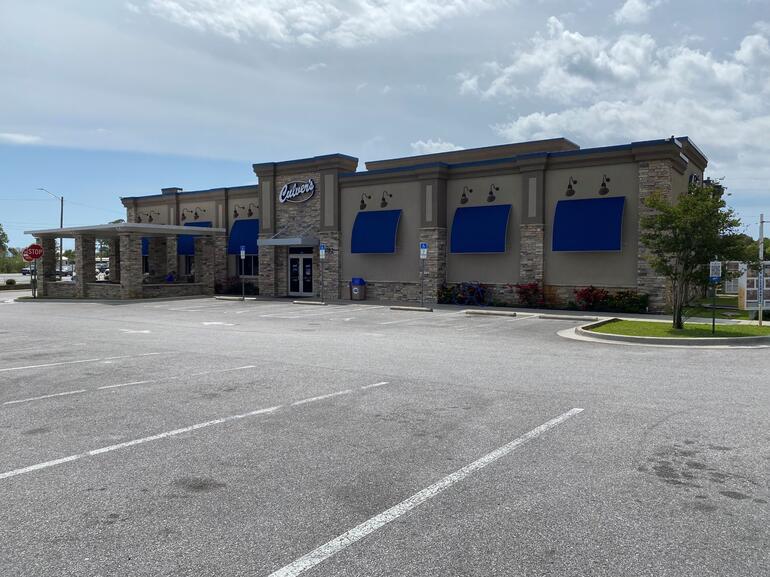
Net lease investment sales have changed significantly as the commercial real estate market has matured. What was once viewed primarily as a specialized corner of the industry has grown into a sizable and increasingly sophisticated investment category attracting private buyers, institutional investors and global asset managers.
The evolution reflects more than an increase in transaction volume. Investors are evaluating net lease assets through a broader capital markets lens, considering tenant credit, lease structure, operational importance, residual real estate value and portfolio diversification. At the same time, sale leasebacks have become an important source of capital for companies seeking to monetize owned real estate while maintaining control of properties essential to their operations.
Recent developments illustrate how far the sector has progressed. In September 2026, J.P. Morgan Asset Management announced the final close of its inaugural U.S. net lease fund with $1.1 billion in total commitments. The same month, CBRE Investment Management announced the acquisition of Tenet Equity, including a $1.6 billion portfolio, and the launch of a strategy to invest further in net lease assets. These moves reflect an asset class that is increasingly finding a place within large, diversified investment platforms.
The rise of a specialized brokerage discipline
Net lease has long appealed to investors looking for leased real estate with clearly defined contractual income and an allocation of property expenses between landlord and tenant. Depending on the lease structure, a tenant may be responsible for some or all property taxes, insurance and maintenance in addition to rent.
Despite that apparent simplicity, net lease investments require specialized analysis. The value of an asset may depend on the tenant’s financial condition, the durability of its business model, the remaining lease term, rent escalations, location quality, unit-level performance and the property’s suitability for another user. A long-term lease may provide greater cash-flow visibility, but it does not eliminate tenant, market or real estate risk.

As the market expanded, specialized brokerage firms developed the research, buyer relationships and transaction processes needed to serve net lease owners and investors. Stan Johnson Company was among the firms that helped establish net lease investment sales as a distinct commercial real estate brokerage specialty.
Through its commercial real estate brokerage practice, Stan Johnson Company pioneered the sale and acquisition of single-tenant net lease properties on behalf of investors navigating the sector’s increasingly complex buyer and capital landscape. Northmarq brought Stan Johnson Company under its portfolio in 2022, bringing that history and specialized experience into Northmarq’s broader investment sales platform.
Today, Northmarq, combined with the efforts of Stan Johnson Company, continues to provide commercial real estate brokerage services for owners and investors pursuing the sale and acquisition of single-tenant net lease properties. Clients can also draw on the company’s broader capabilities across investment sales, debt and equity, loan servicing and fund management.
From individual assets to portfolio strategies
Historically, much of the net lease market’s visibility came from transactions involving individual properties occupied by recognizable retail, restaurant or service tenants. These investments remain an important part of the sector, particularly for private investors and buyers completing 1031 exchanges.
However, the market has broadened beyond the purchase and sale of individual retail properties. Today’s net lease universe includes industrial facilities, logistics properties, manufacturing plants, healthcare facilities, corporate locations and other operational real estate. Investors may pursue individual acquisitions, portfolios, programmatic ventures or dedicated fund strategies.
Industrial assets have been an especially important driver of the net lease market's evolution. Northmarq Research reported approximately $13.5 billion in single-tenant investment sales activity during the second quarter of 2026, representing a 19.1% year-over-year increase. Industrial properties generated $8.4 billion in transaction volume and accounted for nearly two-thirds of all single-tenant investment sales activity. Institutional investors also increased their share of acquisitions compared to the prior year, further reflecting the asset class's growing appeal among larger pools of capital. These trends are increasingly evident in the actions of major asset managers, which are allocating dedicated capital to net lease strategies and acquiring specialized platforms to expand their presence in the sector.
Institutional capital moves further into net lease
The two transactions announced in September 2026 provide a useful snapshot of net lease’s growing institutional profile.
J.P. Morgan Asset Management closed J.P. Morgan Net Lease Real Estate Fund II with $1.1 billion in commitments, exceeding its initial $500 million target. The fund attracted institutional and private wealth investors from the United States, Asia-Pacific and the Middle East, with pension, endowment and insurance institutions anchoring the commitments. Its strategy focuses on single-tenant industrial and industrial outdoor storage properties with long-term triple net leases.
The fund was the first raised by J.P. Morgan following its 2023 acquisition of Trio Investment Group, a specialist net lease investment manager. That progression from specialized platform to global asset manager illustrates one path through which focused net lease expertise is being incorporated into larger investment organizations.
CBRE Investment Management’s acquisition of Tenet Equity provides a second example. Announced on September 8, 2026, the acquisition included a fully leased $1.6 billion portfolio comprising 208 net lease assets and approximately 12 million square feet across 39 states. CBRE Investment Management also announced that it was launching a strategy to invest further in net lease assets and support the Tenet platform’s continued growth.
Tenet has historically specialized in sale leaseback financing for middle-market companies. CBRE Investment Management described the addressable market as large and fragmented and estimated that institutions hold only 1% of the middle-market corporate operational real estate opportunity it identified. That suggests the sector’s institutionalization may still be in an early phase, particularly where operating companies own real estate that could become part of future sale leaseback strategies.
Taken together, the announcements do not mean that net lease has ceased to be a specialized discipline. Instead, they show that specialization is increasingly being joined by institutional scale. Large investors are allocating capital to dedicated strategies, acquiring established platforms and pairing real estate analysis with corporate-credit underwriting.
Sale leasebacks become part of capital planning
The expansion of institutional interest also reflects the evolving role of sale leasebacks. In a sale leaseback transaction, a company sells owned real estate and leases it back, allowing the company to remain in the property while converting real estate equity into capital.
For a business, the proceeds may provide an alternative source of capital to support growth, acquisitions, debt reduction or other strategic priorities. For an investor, the resulting property can offer a long-term lease supported by an operating company and real estate integral to the tenant’s business.
The structure nevertheless requires balanced underwriting. Investors must evaluate the tenant’s credit and operations as well as the real estate itself. Property location, market rent, alternative-use potential and the relationship between rent and the tenant’s financial performance remain important considerations. The J.P. Morgan and CBRE Investment Management announcements reinforce this connection between net lease real estate and corporate capital strategy.
What the market’s evolution means for owners and investors
The continued expansion of the net lease sector creates opportunity, but it also raises the level of competition and sophistication. A larger capital base does not make every property broadly marketable, nor does institutional interest eliminate the need for careful pricing, positioning and due diligence.
For property owners considering a sale, the buyer universe may vary widely according to asset size, tenant credit, lease duration, property type and market. A transaction involving a nationally recognized retail tenant may attract a different group of buyers than an industrial sale leaseback involving a middle-market operator.
For buyers, the growing range of strategies makes disciplined underwriting increasingly important. Lease structure is only one element of the investment. Tenant health, industry trends, rent coverage, contractual escalations and the underlying property should be evaluated together.
The growth of dedicated funds and scaled investment platforms also has practical implications for brokerage. Owners need advisors capable of identifying the most relevant private, institutional and cross-border capital sources. Investors need market information that helps them compare opportunities across tenants, industries and property types. In both cases, net lease specialization remains valuable even as the asset class becomes more mainstream.
Specialized experience within a broader platform
The development of net lease investment sales has been shaped by specialized firms, private investors, 1031 exchange buyers, public companies, institutional managers and the advisors who connect those groups.
Stan Johnson Company is part of that history. Its focus on commercial real estate brokerage for single-tenant net lease properties helped advance a specialized market that now attracts an increasingly diverse and sophisticated pool of capital.
Today, we provide brokerage services for the sale and acquisition of single-tenant net lease properties while giving clients access to a broader commercial real estate capital markets platform.
As net lease continues to evolve, the value of experienced advice remains constant. Whether evaluating an individual disposition, a portfolio strategy, an acquisition or a sale leaseback, owners and investors benefit from understanding the contractual income as well as the real estate, credit and capital considerations behind it.
Interested in discussing a net lease acquisition, disposition or sale leaseback? Connect with net lease professionals in Northmarq’s National Net Lease & Sale Leaseback Group.
Insights
Research to help you make knowledgeable investment decisions