
San Diego multifamily inventory growth remains elevated
Q1 2026
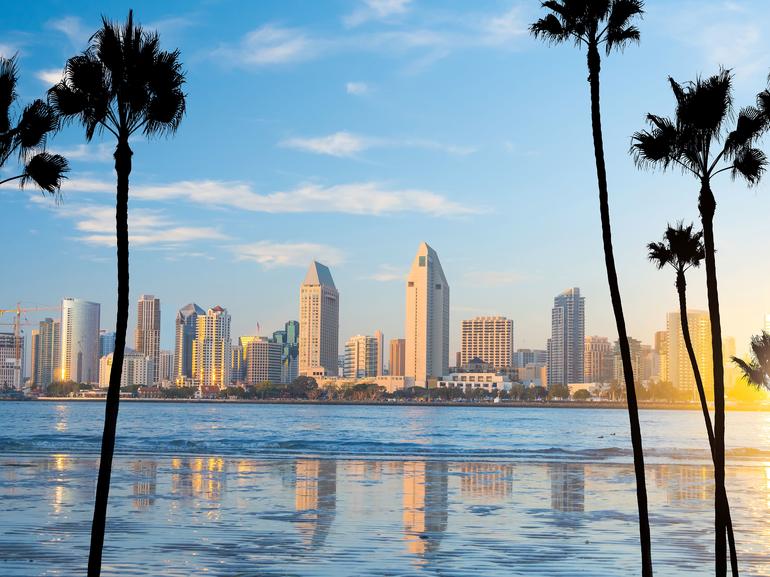
San Diego multifamily market overview:
Strong demand in the San Diego multifamily market has helped to prevent meaningful softening in fundamentals amid rapid supply growth. During the past year, apartments recorded net move-ins for more than 3,600 units, keeping the vacancy rate within a range of 4.6% to 4.8%. Conditions have been mixed across submarkets, with select areas shifting in a positive direction. Area asking rents rose during the first quarter, led primarily by the Escondido/San Marcos and La Jolla/University City submarkets, with gains of 1.0% and 0.9%, respectively. The La Jolla/University City submarket was the only submarket to record improvements in both rent and vacancy in the past 12 months. The Vista submarket led in vacancy improvement, decreasing 110 basis points over the same period.
Multifamily investment sales activity in San Diego maintained its pace during the first quarter, with the total number of sales closely tracking levels recorded during each of the trailing four quarters. The mix of properties that have traded this year is skewed heavily towards Class B assets, which accounted for half of all transactions while their median price increased by more than 30%. The rise in Class B pricing was driven primarily by the premium locations and the quality of these properties, with middle-tier assets selling in Encinitas and near the coast in Point Loma. This contributed to a 9% increase in the overall median sale price, bringing it to $362,600 per unit and in line with peak levels recorded in 2022. After limited transaction activity during the past five years, the Poway/Santee/Ramona submarket recorded a few sales at the start of 2026.
Looking ahead:
The robust construction pipeline will remain a key driver of rent and vacancy dynamics in San Diego in 2026. Although deliveries will decline from 2025 levels, they will still far exceed historical averages. Renter demand is expected to trail the pace of new supply, though the imbalance should ease, resulting in a modest increase in vacancy broadly in line with last year. Asking rents are forecast to continue edging lower, though the rate of decline is expected to slow to just 1.0% for the year. Even as new units come online at a strong pace, the development pipeline remains elevated. Balboa Park, one of the region’s smallest submarkets, is recording some of the highest levels of construction activity in the region. In 2026 alone, inventory in this area is expected to expand by 14%.
Multifamily investment sales activity in San Diego in 2026 is expected to accelerate from last year’s pace, though the increase in total activity will likely be modest. While the transaction mix has been atypical to this point in the year, a normalization is expected over the remainder of the year. The share of Class B and Class C assets changing hands should rebalance as more lower-tier properties come to market. Class A properties are expected to continue trading, though their share of overall activity will likely remain modest, consistent with historical patterns. An increase in transactions is forecast for the Downtown, Balboa Park, and Chula Vista/Imperial Beach submarkets. These areas have all recorded little to no sales activity so far this year, despite typically ranking among the most active submarkets in San Diego.
Learn more about San Diego’s multifamily market
Contact the experts at Northmarq’s San Diego office today!
Get the report


Insights
Research to help you make knowledgeable investment decisions