Capital returns as fundamentals firm for Salt Lake City’s multifamily market
Q1 2026
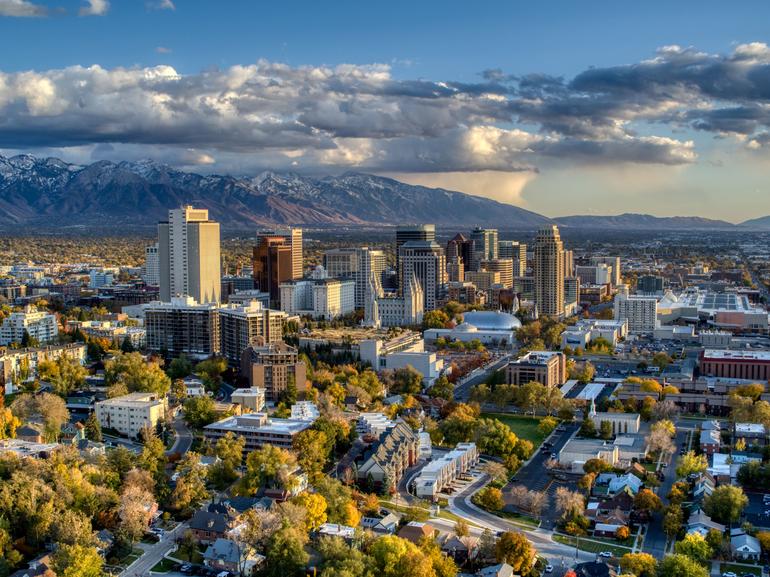
Salt Lake City multifamily market overview
The Salt Lake City multifamily market performed well to start the year, with vacancy holding at 7.3% and rents advancing after a downturn during the second half of 2025. While asking rents remain down 1.0% year over year, the quarterly trend turned positive in the first quarter, and several submarkets returned to meaningful growth. Provo and the Orem/Lehi corridor led the region with annual rent gains of 2.2% and 1.8%, respectively, reflecting the benefits of tighter supply conditions and continued tech-sector hiring. Elsewhere, lease-up competition remains elevated, with most submarkets offering concessions in the 10% to 18% range. Affordability continues to support demand across the Wasatch Front, as Salt Lake County’s rent-to-income ratio remains well below levels recorded in comparable western metros.
Investment activity picked up in the first quarter of 2026, with transaction counts rising 19% from the first quarter of 2025 and total volume reaching $275.5 million. Weber County led the region's deal flow, a pattern consistent with the submarket's lower price points, lighter concession burden, and higher yields relative to the rest of the Wasatch Front. The year-to-date average price is running below the 2025 full-year average of $274,500 per unit, reflecting a deal mix weighted toward smaller, lower-priced Class B and Class C assets in suburban submarkets. With cap rates holding near 5.3%, the broader market appears to have largely worked through the post-peak repricing cycle.
Looking ahead for Salt Lake City:
The Salt Lake City multifamily market is positioned for gradual improvement through the remainder of 2026. Vacancy is expected to average approximately 7.1% by year-end, a modest improvement from 2025, as demand continues to absorb the remaining pipeline. Rent performance will likely remain mixed through the first half of the year, with supply-heavy submarkets such as Downtown Salt Lake City taking longer to stabilize, while tighter areas like Provo and the Orem/Lehi corridor build on recent momentum. The most important forward-looking indicator remains the thinning construction pipeline, with deliveries forecast to hold near 6,000 units in 2026. With permitting activity well below peak levels, the competitive pressure on new lease-ups is expected to ease in the coming quarters. Steady employment growth and continued in-migration should provide a supportive backdrop for demand throughout the year.
Investment activity is expected to build on the momentum established in the first quarter, supported by improving operating fundamentals and a gradually stabilizing pricing environment. The recovery in average pricing during 2025 suggests the market has largely worked through the post-peak repricing cycle, and with cap rates holding near 5.3%, the foundation is in place for a more active transaction market through the balance of the year. Private buyers are likely to remain the dominant source of demand for smaller vintage assets in Salt Lake County, while institutional capital should continue to gravitate toward markets with stronger near-term fundamentals, such as the Provo-Orem corridor. As concession levels moderate and rent growth re-emerges in the region's tighter submarkets, improving net operating income should support further pricing gains and encourage additional sellers to bring multifamily assets to market.
Learn more about Salt Lake City’s multifamily market
Contact the expects at Northmarq’s Salt Lake City, Utah office today!
Get the report

Insights
Research to help you make knowledgeable investment decisions