
Austin’s multifamily vacancy posts first annual decline since 2021
Q4 2025
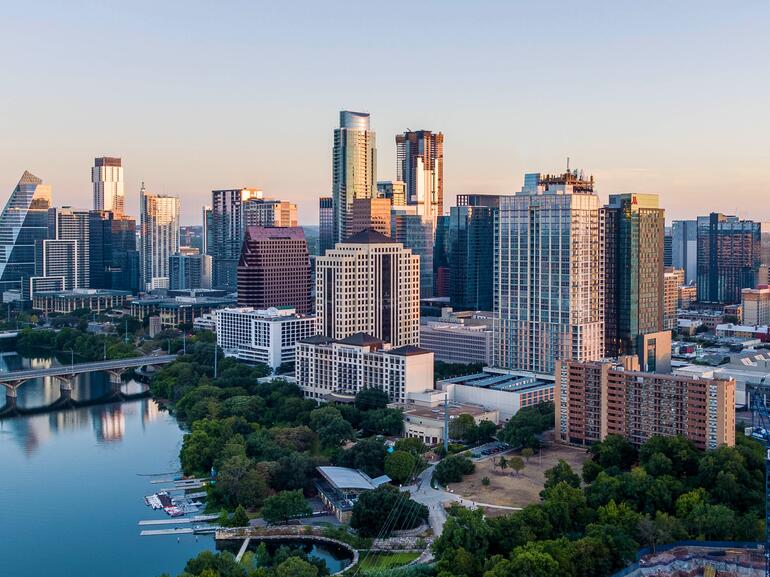
Austin multifamily market overview
Renter demand for units outpaced new supply growth in Austin over the past year, resulting in the market’s first calendar-year vacancy decrease since 2021. Net absorption totaled nearly 20,300 units in 2025, with consistently strong performance recorded throughout the year. Vacancies ticked lower in each of the last three quarters, reaching 11.5% by year end. Demand remained elevated even as the local labor market, which has attracted several leading tech companies in recent years, posted a more modest pace of expansion in 2025. Despite the reversal of the recent vacancy trend, operators continue to trim rents to attract and retain renters. Rents posted a sharp decline in 2025, the third consecutive year where average rents declined by more than $100 per month. Some of the market’s supply-side pressures should ease going forward; multifamily construction starts declined by nearly 60% in 2025 to about 7,100 units.
Multifamily sales activity showed modest improvement in 2025, with transaction velocity showing signs of gaining momentum, particularly in the second half of the year. The number of properties changing hands rose by 17% from 2024 to 2025, with the highest levels of activity occurring in the third and fourth quarters. The North Austin, Round Rock, and Pflugerville submarkets spurred the increased activity; each submarket posted year-over-year sales velocity increases in 2025. Combined, these submarkets accounted for more than 40% of the market’s total transactions for the full year. Despite the recent increase in investment volumes, annual transaction counts are down more than 50% from the 2021 peak. Declines in activity have been most pronounced among Class A properties, where competition from recent supply remains elevated. Class B properties have accounted for more than 50% of total transaction activity in each of the past four years, with that figure topping 70% in 2025.
Looking ahead:
The year ahead may be shaping up to be a transitional period for the Austin multifamily market. A cooling development pipeline is the key factor behind anticipated improvements in operating fundamentals. Multifamily permitting activity has declined each year since peaking in 2021, and completions are forecast to contract by more than 40% compared to peak levels from the past two years. While deliveries have been elevated, absorption surged in 2025, a short-term burst of supply-demand alignment that should persist into 2026. As deliveries slow in the coming quarters, continued renter demand in 2026 should result in vacancy declines.
Sales activity in Austin’s multifamily investment market is expected to pick up late in 2026, although annual totals will likely remain below historical norms. Investor sentiment will likely improve as area vacancy rates contract, but it will take significant improvement before the region is seen as being in balance. A thinning development pipeline should aid in the recovery, and operating conditions could gain ground more quickly if the local labor market rebounds. The Austin area has demonstrated an ability to attract prominent companies and high-wage workers, and additional announcements will ultimately support renewed investor demand.
Learn more about the Austin multifamily market!
Contact the experts at Northmarq’s Austin office today!
Get the report


Insights
Research to help you make knowledgeable investment decisions