
Retail bank growth: Why physical branches still matter in 2026
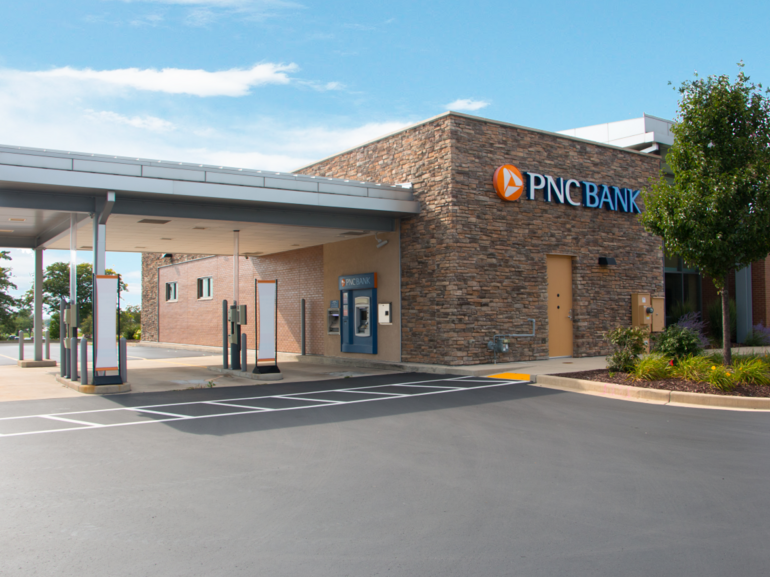
Despite years of predictions that digital banking would render the physical branch obsolete, major retail banks are investing heavily in brick-and-mortar real estate in 2026. The reasons are grounded in consumer behavior, competitive positioning and deliberate market expansion. And for net lease investors and developers, they translate directly into sustained demand for well-located, single-tenant bank assets.
Research continues to show that consumers — particularly those making high-value decisions around mortgages, business accounts and wealth management — prefer in-person interactions. Banks are responding by right sizing their networks. They are closing underperforming legacy locations while opening modern, smaller-format branches in markets where they lack density. Acquisitions are accelerating this strategy, as well, giving institutions like Fifth Third, PNC and others an immediate physical presence in new geographies that organic growth alone could not deliver as efficiently.
Target market selection is equally telling. Banks are prioritizing high-growth Sun Belt corridors, underbanked secondary cities and rural communities where competitor presence is limited and population growth supports long-term branch viability. These are the same markets where net lease developers and investors have concentrated capital over the past several cycles — reinforcing alignment between bank growth strategies and investment opportunity.
What the data shows: Six banks, one clear direction
Bank of America exemplifies the selective growth model
Rather than blanket expansion, BofA is entering specific markets where consumer density, household income levels and competitor gaps support new branch viability. Physical locations serve as anchor points for deepening relationships — particularly for mortgage origination, small business lending and wealth advisory services that require trust-building over time.
Net reductions in legacy markets are being offset by intentional openings in high-opportunity corridors, a pattern that net lease investors should read as strategic repositioning rather than contraction.
Chase Bank is pursuing the most aggressive branch growth strategy among major U.S. banks
Chase’s target market selection reflects a clear read on where consumer demand is underserved. The bank is concentrating new openings in states with strong population inflows and limited Chase branch density — particularly across the Southeast and mid-Atlantic — signaling confidence that physical presence drives deposit growth, brand loyalty and wallet share in competitive regional markets.
Chase has also identified smaller cities and rural communities as meaningful opportunities, recognizing that proximity to a branch remains a deciding factor for consumers choosing a primary financial institution.
The scale of planned renovations further suggests the bank views the branch not merely as a transaction point, but as a relationship hub — one that supports mortgage lending, business banking and premium services that digital channels alone cannot fully deliver.
Fifth Third Bank is turning migration trends into branch opportunity
Fifth Third Bank is making a decisive push into high-growth markets where consumer migration is outpacing established banking infrastructure. Texas — one of the fastest-growing states in the nation by both population and business formation — sits at the center of this strategy, reflecting a broader thesis that underbanked, rapidly expanding markets offer a stronger long-term return on branch investment than densely competed legacy markets.
Continued expansion across Florida, North Carolina and South Carolina reinforces the Sun Belt orientation. These are corridors where household formation, income growth and commercial activity are consistently attracting both consumers and businesses looking for a trusted local banking presence.
The February 2026 acquisition of Comerica adds further strategic depth, providing Fifth Third with an accelerated entry point into established customer relationships and physical real estate that would have taken years to build organically. With rebranding of those locations beginning in September 2026, investors and developers should expect near-term conversion activity — and the longer-term opportunity to support a bank actively scaling its footprint in some of the nation's most competitive net lease markets.
PNC Bank capitalizes on M&A and organic growth
PNC Bank is executing a dual-track growth strategy that combines aggressive organic expansion with acquisition-led market entry — a combination that has direct implications for net lease activity across a broad set of markets.
The January 2026 acquisition of FirstBank is a clear signal of PNC's intent: rather than waiting for organic branch growth to establish density in high-opportunity western markets, the bank used mergers and acquisitions to accelerate its presence in Arizona and Colorado, two states with strong population growth and rising commercial real estate demand. That pattern mirrors how other large regional banks have approached expansion in Sun Belt and Mountain West corridors — acquiring an established footprint and customer base, then modernizing those assets to align with current branch standards.
The renovation commitment is equally significant. A full refresh of the existing portfolio points to a bank investing in the long-term productivity of its physical network, not winding it down. That conviction is showing up in the market as well. Across recent sales of PNC-leased assets, the bank has moved to exercise future lease extension options early, well ahead of designated notification periods. For net lease investors, this signals durable occupancy intentions and a tenant actively reinforcing its real estate relationships.
New branch openings across roughly 20 markets add further pipeline depth, particularly in cities where PNC sees consumer density and competitor gaps that favor a strong local presence. Taken together, the strategy reflects a bank that views physical branches not as a legacy cost, but as a competitive advantage — one that supports deposit growth, commercial lending and wealth management in markets where in-person relationships remain central to how consumers and businesses choose their primary financial institution.
Wells Fargo is approaching 2026 growth with a disciplined, optimization-first mindset
Rather than pursuing broad network expansion, Wells Fargo is concentrating new openings in select high-density urban markets — Chicago, Nashville and New York City — where consumer traffic, commercial activity and competitor dynamics support the economics of a new branch. These are not emerging markets; they are established, high-value corridors where Wells Fargo sees room to deepen its presence and capture wallet share among consumers and businesses that value a full-service banking relationship.
The emphasis on large-scale renovation of existing locations signals a parallel priority: converting the current network into a more productive, relationship-oriented asset. Modernized branches serve as platforms for mortgage origination, wealth management and business banking — services that require a physical environment capable of supporting extended, trust-based conversations.
For net lease investors, the renovation commitment reinforces long-term occupancy intentions, while the selective urban expansion strategy points to a tenant that views location quality and market positioning as central to its growth thesis.
U.S. Bank is accelerating its physical footprint with a targeted, quieter strategy
Similar to Wells Fargo, U.S. Bank is taking a more targeted approach: deepening branch density, improving convenience and driving deposit growth in markets where it already has a physical presence and brand awareness. The bank is investing roughly $200 million annually to build new branches and renovate or refresh existing locations, with a goal of updating its full branch network on roughly a 10-year cycle. Its newer branch format shifts the customer experience away from traditional teller-line layouts and toward more relationship-driven spaces, including customer support stations, private engagement offices, in-lobby ATMs and, in some locations, community areas or cafés.
The strategy is rooted in proximity. U.S. Bank is concentrating growth in established and high-opportunity markets where it can improve branch density and give customers convenient access — ideally within a 15- to 20-minute drive of where they work, shop and spend time. Charlotte, North Carolina, remains a clear growth market, where the bank has stated a desire to roughly double its branch presence. California is another major priority following the MUFG Union Bank acquisition, which significantly expanded U.S. Bank’s West Coast customer base and branch network. Other markets identified for expansion, renovation or density-building include Phoenix, Denver, Nashville, Portland, Boise, Las Vegas and Minneapolis-St. Paul.
For net lease investors and developers, the strategy is instructive. U.S. Bank’s combination of renovation spending, selective new builds, density-focused infill and modernized branch design points to a tenant focused on the long-term productivity of its real estate. Its site-selection priorities appear to favor convenience-driven locations in established trade areas, growth corridors and markets where physical branch access can reinforce customer acquisition, deposit growth and broader banking relationships.
A convergence that favors well-positioned net lease assets
The strategies of these six banks reflect a broader industry realignment: consumer preference for in-person service at key financial milestones, demographic-driven migration into high-growth corridors, intensifying competition for deposits in underserved markets, and a shift toward smaller, more versatile branch formats built for relationship banking rather than routine transactions. This convergence creates a durable pipeline of strong credit, long-term tenants actively seeking well-located real estate across a widening range of markets.
For net lease investors and developers, understanding what is driving bank expansion — not just where it is occurring — is essential to evaluating site selection criteria, underwriting long-term lease stability and identifying development opportunities before they are fully priced into the market.
Get the report



Insights
Research to help you make knowledgeable investment decisions