
First-half multifamily sales double year over year in Philadelphia
Q2 2025
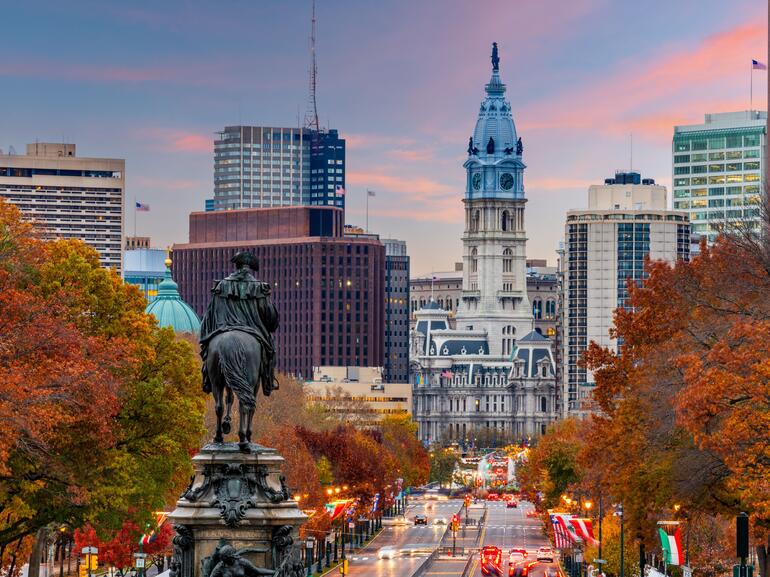
Recent growth has supported renter demand for multifamily properties across Philadelphia. Since early 2023, the region has added approximately 80,000 new residents and nearly 100,000 net new jobs. The region’s large and expanding education and health services sector has fueled gains. This growth has supported peak levels of net absorption in 2025. Specifically, the Lansdale and University City submarkets posted the sharpest year-over-year vacancy declines in the suburbs and city, falling 70 and 160 basis points, respectively. While inventory growth during the first half was modest, the construction pipeline remains elevated, with more than 15,000 units underway and an additional 7,000 units scheduled to deliver in the second half. Nearly 5,000 units that are under construction are located in Center City, the River Wards, Kensington, Fishtown, and Northern Liberties. These areas have accounted for more than 40% of net absorption throughout the market in recent periods, maintaining stable vacancy levels even as new units have come online. At the same time, slower construction in outlying suburbs may cause tightening across the region as the core works through its heaviest delivery totals in recent years.
After a slight slowdown in 2024, Philadelphia’s multifamily investment market gained momentum in the first half of 2025. Transaction velocity more than doubled first-half 2024 levels, driven by a rise in Class A trades and a growing number of sales over $20 million. Cap rates varied by location, with urban assets trading in the low- to mid-5% range, while suburban deals showed a broader spread. Pricing has picked up to this point in the year after declining in 2023 and 2024. An uptick in transactions over $20 million signals renewed interest for larger deals despite a challenging capital environment. New participants like Cantor Fitzgerald are entering the market, highlighted by the company’s first city acquisition with 2116 Chestnut following last year’s Phoenixville deal. Recent transactions highlight institutional interest in assets in supply-constrained submarkets. Investment activity remained focused in central and high-growth corridors, including Center City, the Main Line, and suburban areas like King of Prussia and Phoenixville.
Looking ahead
New supply will accelerate through year end, with 9,500 units expected to deliver in 2025, marking the highest annual total for the Philadelphia region in more than a decade. This influx of new inventory is occurring during a period of elevated renter demand for units, supported by job growth and steady net migration and lack of inventory for sale. Vacancy is projected to hold near its current levels through the end of the year, and rents are forecast to continue to trend higher at a steady pace, with more meaningful rent acceleration likely delayed until 2026. Construction starts have declined sharply, signaling the end of the recent development cycle. Large-scale projects like Schuylkill Yards and the Navy Yard will continue to shape long-term demand in the urban core, while suburban nodes such as Conshohocken, King of Prussia, and the Route 202 corridor remain stable amid continued growth in the life sciences and logistics industries.
Transaction volume in the Philadelphia region’s multifamily market is positioned to remain above long-term norms through the end of 2025. A sizable volume of deals currently on the market or under contract points to a potential pickup in activity during the second half of the year. Investors are responding to outlooks calling for rent gains and NOI growth in 2026 as the pace of new construction slows. A more advantageous financing environment in 2026 could further support investment activity, assuming rate cuts materialize as anticipated. Strengthening fundamentals and growing buyer interest suggest the sector is regaining traction after a slower 2024. Continued growth in the region’s healthcare and life sciences employment base, paired with long-range development in University City and the Navy Yard, is expected to support renter demand and deal flow beyond 2025.
Learn more
Contact our Philadelphia office for more information.
Get the report


Insights
Research to help you make knowledgeable investment decisions