
Construction delays in the Tucson multifamily market shift supply wave to 2026
Q4 2025
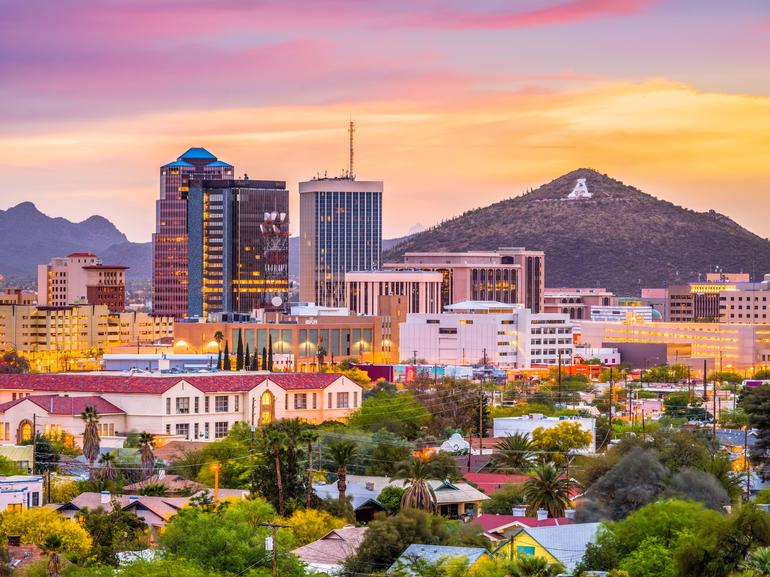
Tucson multifamily market overview
Fewer apartment units were delivered in 2025 than were originally forecast, delaying delivery into 2026. The delays limited supply growth in the Class A segment and vacancy in the top-tier closed the year at just 6.2%, down 460 basis points annually. Heightened deliveries in 2023 and 2024 drove Class A vacancy higher at a rapid pace, with the rate reaching as high as 15.9% during the second quarter of 2024. The recent improvement highlights Tucson’s underlying demand for these asset types. As long as supply growth is not elevated, top-tier assets can absorb new renters, keeping vacancy conditions healthy. While Class A rents trended lower, they outperformed Class B and Class C apartments by a wide margin. Deliveries in 2025 totaled approximately 700 units, down considerably from averages in the prior two year and closer to the region’s long-term supply growth.
Local investment activity continued to gain momentum in the fourth quarter. While the 2025 transaction count still fell short of historical norms, it far outpaced the previous two years, which combined for roughly one dozen transactions. In 2025, the median sale price dipped 18% to $119,900 per unit after nearly reaching peak levels in 2024. This was partly driven by a 29% decline in Class C pricing, with these lower-tier assets accounting for more than half of all sales. Additionally, falling rents across the market alongside rising vacancy in middle-tier and lower-tier properties likely played a role in this dip in pricing. There was a single Class A sale in 2025, marking the first top-tier transaction in Tucson since 2021.
Looking ahead
While 2025 was supposed to be a near-peak year for new construction, there were several delays during the fourth quarter that pushed delivery dates for properties totaling around 1,900 units back by an average of three months. This will contribute to a cyclical high number of deliveries in 2026, with roughly 2,800 units slated for completion in the coming year. Nearly all of these units are set to deliver in the first and second quarters, and a competitive leasing environment is expected to persist throughout much of the year ahead. Vacancy increases will likely ramp up as the year progresses, with the rate projected to rise 100 basis points annually. Rents are expected to continue to trend lower in the coming quarters, but at a lesser pace than they did in 2025.
Investment sales in the Tucson multifamily market are forecast to continue at a steady pace throughout 2026, roughly matching the total number of sales recorded during the past year. While this level of activity will far outpace 2023 and 2024 levels, it is unlikely that the annual transaction count will approach historical averages until at least 2027 or 2028. The impact on operating conditions from the spike in deliveries scheduled for next year may keep some investors on the sidelines. Supply growth is projected to return to trend following this year and rent growth should resume at around the same time that inventory growth levels off. Similarly, vacancy increases are expected to peak in 2026 before beginning to stabilize and eventually improve in coming years. Soft fundamentals over the next 12 months may create value-add opportunities in the near term.
Learn more about the Tuscon Multifamily Market
Contact the experts at Northmarq's Phoenix office today.
Get the report


Insights
Research to help you make knowledgeable investment decisions