
Asking rents post gains in first quarter for the Inland Empire multifamily market
Q1 2026
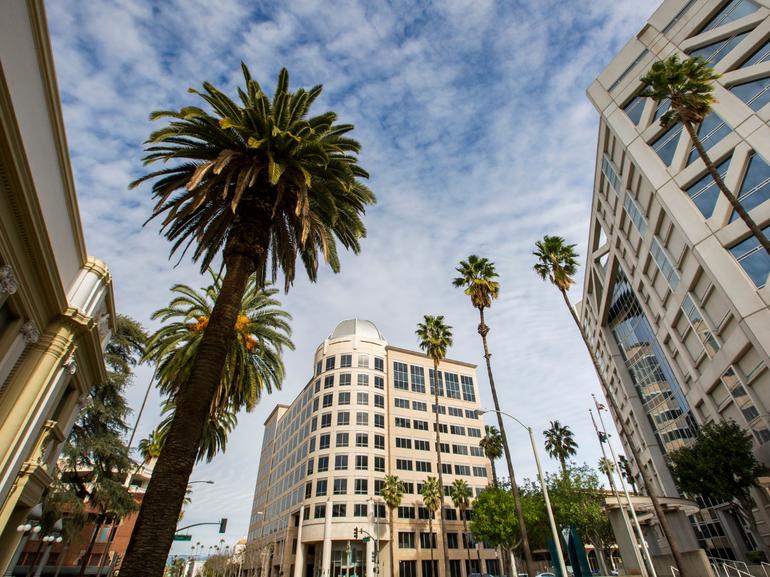
Inland Empire multifamily market overview
The Inland Empire multifamily market displayed early signs of stabilization in the first quarter of 2026, following a period in which elevated deliveries kept upward pressure on vacancy. Over the trailing 12 months, new supply outpaced absorption, pushing the vacancy rate up 80 basis points year over year. Class A properties were most impacted by the ramp up in new supply, while the combined vacancy rate for Class B and Class C properties ended the first quarter at just 4.2%, about 100 basis points higher than long-term averages. This quarter, rents reversed course after two consecutive quarterly declines, advancing by 1.1%, an early signal that the market’s supply-demand imbalance may be easing. Operators were able to increase rents despite a mixed employment market. The logistics sector, a cornerstone of Inland Empire economics, remains a variable to watch as port-driven hiring has been uneven given recent trade policy conditions.
The Inland Empire investment market opened 2026 with its strongest first quarter transaction pace since 2023, reflecting growing investor confidence as the supply cycle turns. Activity was concentrated in Class B apartments in San Bernardino County, where value-add fundamentals and relative affordability have continued to attract buyer interest. Class B properties, which accounted for the majority of sales, are recording median pricing in line with 2025 levels and up 24% from 2024. While overall median pricing is down, the decline reflects composition more than deterioration in market values. Cap rates for stabilized Class A properties traded in the high-4% to low-5% range, while Class B and Class C value-add assets have transacted closer to 6.0%. The spread between asset classes reflects the market’s current divergence, with institutional capital gravitating toward stabilized product and private buyers pursuing yield in the middle and lower tiers of the market.
Looking ahead
The operating outlook for the Inland Empire is cautiously optimistic heading into the remainder of 2026. Approximately 2,900 units are scheduled for delivery for the full year, a 27% reduction from 2025, and with absorption at roughly 3,000 units over the past year, the market appears to be approaching equilibrium. If demand holds at its current pace, vacancy should stabilize near current levels and set the stage for improvement. The full-year rent forecast calls for a 1.3% gain, a modest but important shift after two years of softening. Projected employment growth reflects a soft labor market, but there is a chance for stronger gains if logistics hiring rebounds as trade volumes normalize. The Southwest Riverside County/Temecula submarket warrants attention as an active construction corridor in the region. The pace at which those units are absorbed will be an important indicator of broader market trajectory.
The investment market is expected to build on its first quarter momentum. Current forecasts provide clearer underwriting than the market has offered in recent periods, potentially supporting an increase in investment sales activity. Class B acquisitions in San Bernardino County are likely to remain the most active segment of the market near-term, though stabilizing Class A fundamentals could draw increased institutional interest as lease-up timelines improve. Cap rates are expected to hold near current levels, particularly if rents firm through the second half of the year. Longer term, the Inland Empire’s position as one of Southern California’s most affordable multifamily markets, combined with its structural role as a logistics hub, continues to underpin the investment case for the region.
Learn more about the Inland Empire’s multifamily market
Contact the experts at our Irvine office today!


Insights
Research to help you make knowledgeable investment decisions