
Vacancy remains low in Washington, D.C., but uncertainty restricts multifamily activity
Q2 2025
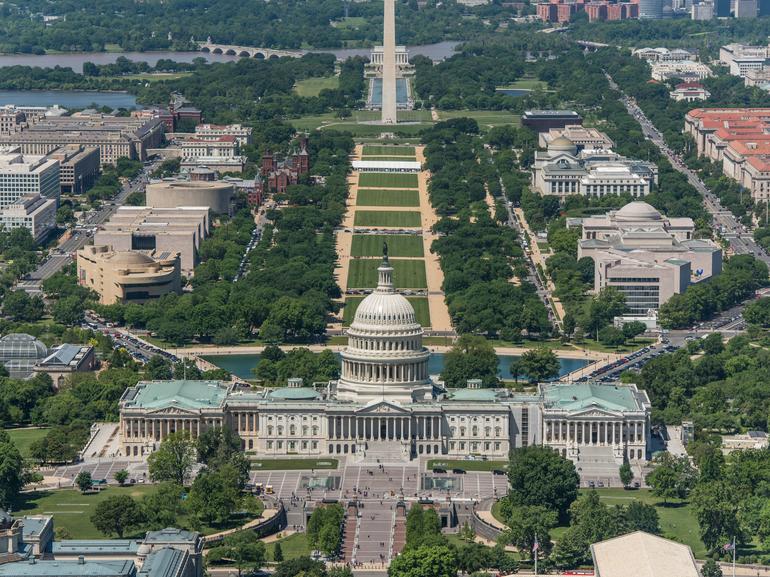
Despite some economic disruption affecting the federal government workforce, the Washington, D.C., multifamily market posted healthy operational performance during the first half of this year. Vacancy has remained within a very tight range for more than two years while rents posted a slight advance. Development of new rental units has accelerated, and this year is on pace to be the most active period of new deliveries since 2021. Construction activity is occurring throughout the region, with the largest concentration of new projects located in Northern Virgina, where vacancies ended the second quarter at just 3.5% and rents are about $100 per month above the regional average. In the Maryland suburbs, Bethesda, Rockville, and Silver Spring are top locations for properties that are currently under construction.
Investment activity in the Washington, D.C., region got off to a very slow start to the year, as transactions were limited by levels of uncertainty that were unique to the market. Conditions showed signs of returning closer to normal during the second quarter, as transaction activity gained momentum and bounced off of lows recorded at the beginning of the year. In properties that have sold this year, per-unit prices are down, which is largely a function of fewer properties located in Northern Virginia changing hands. In the properties that have sold to this point in 2025, the median price in Northern Virginia has topped $300,000 per unit, while prices are lower in both the Maryland suburbs and within the District.
Looking ahead
The second half of 2025 should be less volatile than the first half within the Washington, D.C., region, although it will likely take a few more quarters for uncertainty to lift and for the outlook to fully normalize. Developers are expected to remain active, with projects located throughout the region’s affluent suburbs. In addition, multifamily development within the District is gaining momentum , particularly as the local government incentivizes office-to-residential redevelopment projects. While it will likely take several years for these conversions to enter the local multifamily inventory, the program is expected to add more than 8,000 new housing units within the District.
The investment market in Washington, D.C., is being influenced by two competing forces. The first is strong operational performance of rental properties, highlighted by tight vacancy conditions, healthy absorption, and rising rents. These forces traditionally buoy investor sentiment and spark activity. The other pull on the market is the uncertainty that accompanies declines in the region’s core employment sector; federal government employment in the region has contracted by nearly 5% year to date, although the bulk of the cuts have likely already occurred, and conditions should stabilize beginning in 2026. There could be some additional disruption in the near term as the government heads towards a potential funding shutdown at the end of the third quarter, but historically, these have been resolved within a few weeks.
Learn more
Contact our Washington, D.C. office for more information.
Get the report

Insights
Research to help you make knowledgeable investment decisions