
Multifamily vacancy and rents inch upward in the Central Valley amid growing supply
Q1 2025
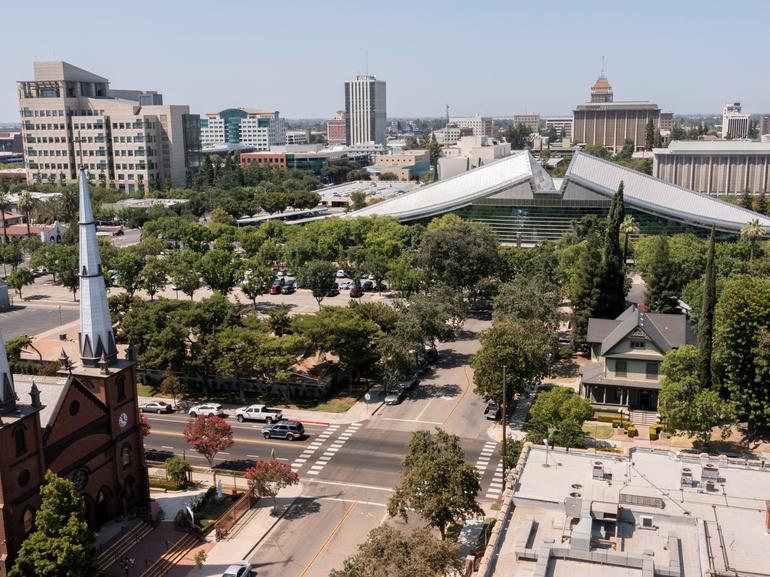
The Central Valley multifamily market continued to follow trends set in 2024. The regional vacancy rate rose slightly but remains only marginally higher than one year ago. County-level trends varied; Fresno County, the region’s largest rental market, posted a 100-basis-point vacancy decline to 4.2%, while Kern and Tulare counties each recorded increases of more than 100 basis points. Rents continued to rise at a healthy pace, with year-to-date growth ahead of last year’s early performance. It may prove difficult to sustain this pace of rent increases through the remainder of this year as deliveries reach a five-year high. San Joaquin and Fresno counties are likely to lead regional performance, supported by steady renter demand and improving occupancy. San Joaquin County has absorbed nearly 30% of the Central Valley’s new inventory since 2020, yet still recorded only a minor vacancy increase over the past year, underscoring the submarket’s resilience amid elevated construction.
Multifamily investment activity in the Central Valley remained consistent with recent quarters, though transaction counts are still down roughly 50% from the peak years of 2020 and 2021. Even with fewer deals closing, activity has been sufficient to support price discovery. Cap rates have climbed about 60 basis points year over year, generally ranging between 5% and 6%. Sales have occurred across the region, with larger population centers like Fresno and Visalia among the more active areas. Recent deals have involved primarily 1970s and 1980s vintage Class B and Class C properties. Most transactions have fallen in the $1 million to $10 million range, reflecting continued investor focus on smaller, value-add opportunities.
Looking ahead
Despite steady early-year property performance, the Central Valley multifamily market is on pace to record its highest single year of new construction since 2020, resulting in some modest supply-side pressures. Developers are expected to complete approximately 1,800 units in 2025, about 50% higher than the annual total since 2015. This will mark the sixth year out of the past seven where deliveries are above trend, and vacancy is projected to rise for a third consecutive year. Still, conditions vary by county; Fresno and Kern counties are expected to post rent gains this year, while smaller markets such as Tulare, Madera, and Kings have recorded solid rent momentum in recent quarters. Additionally, rising insurance costs remain a concern for apartment owners in California. In May, the state approved an emergency rate increase for State Farm, allowing premiums on multifamily policies to rise by up to 38% starting in June, further underscoring the growing expense burden in the wake of recent wildfire damage.
The investment market is positioned to regain momentum in the coming quarters, supported by cap rates that may improve deal feasibility. Last year, transaction activity was strongest in the second and third quarters, and early indicators suggest a similar seasonal uptick could occur this year. A greater number of trades have been recorded at or above a 6% cap rate, levels that appear sufficient to support additional deal flow. If rates hold near this mark, more buyers may move off of the sidelines as acquisitions become more economically viable. Longer term, the Central Valley’s strong population growth outlook should continue to attract investors. Markets like Stockton, which led the region in population gains and posted the highest rent growth over the past year, may garner particular attention.
Learn more
Contact our Fresno office for more information.
Get the report

Insights
Research to help you make knowledgeable investment decisions