
Oklahoma City and Tulsa multifamily vacancy drops to four-year low
Q2 2026
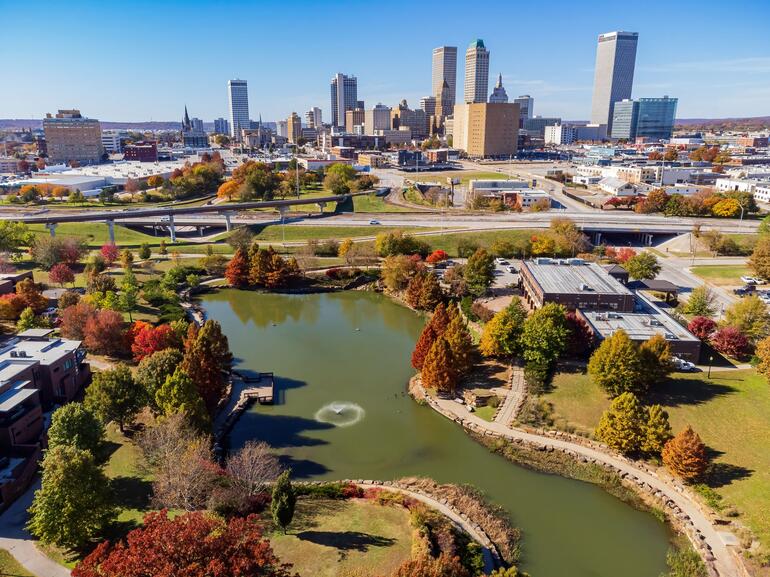
Oklahoma multifamily market overview
The Oklahoma City and Tulsa multifamily markets continue to benefit from slowing supply growth. The combined construction pipeline, which has contracted steadily since 2024, declined again during the second quarter and now represents a small share of inventory across both markets. At the same time, employment growth was limited over the past year, yet vacancy fell to its lowest level since 2022 as absorption continued to outpace new supply. Asking rents increased 2.3% year over year, with Class A properties posting the strongest rent growth in both markets. With fewer units under construction and completions expected to slow further, supply pressures appear more limited than in recent years.
After slower transaction velocity throughout 2025, sales activity gained momentum through the first half of 2026. Second-quarter transaction counts reached their highest level since 2023 across the Oklahoma City and Tulsa metros combined. The increase coincided with improving operating fundamentals, including lower vacancy and continued rent growth. Median pricing remained relatively stable, though per-unit pricing varied widely by asset quality and vintage. Recent closings ranged from the 1960s- and 1970s-era properties at the lower end of the spectrum to mid-2010s product at the upper end. Cap rates generally ranged from 5.5% to 6.5%.
Looking ahead
The near-term operating outlook for Oklahoma City and Tulsa has strengthened as supply pressures continue to ease. With the pipeline at its lowest point in years and completions expected to fall by roughly half from last year’s total, the supply outlook appears supportive of further tightening. Demand does not need to accelerate for conditions to improve; it only needs to remain near current levels. The region’s affordability and stable population base make that a reasonable expectation. The larger question is permitting activity, which has exceeded historical norms for two consecutive years. Many permitted projects have yet to break ground, but they represent future supply likely to arrive in 2027 and beyond. For operators, this creates a window of limited new competition that should support continued rent growth before new projects begin competing for the same renter pool. How quickly permitted projects move from approval to delivery will help determine how long that window remains open.
While transaction activity remains below the 2022 peak, Oklahoma multifamily continues to offer a compelling investment proposition, particularly as investors search for opportunities beyond larger Sun Belt markets. As a broader pool of buyers grows comfortable underwriting Oklahoma City and Tulsa, sales activity is positioned to gain momentum. The composition of transactions has already begun to shift. The number of sales above $20 million during the first half of 2026 matched the total recorded in all of 2025, highlighting the growing role of larger transactions in the market. Many communities delivered during the 2024 construction peak have now completed lease-up and established stabilized income, creating a larger pool of institutional-quality assets that can be marketed for sale. As more of these properties come to market, newly delivered Class A assets are expected to account for a growing share of investment activity.
Connect with our Tulsa team today
For a more complete analysis of the supply, demand, vacancy, rent and investment trends in the Oklahoma multifamily market, download and read the full report below.
The Northmarq Tulsa provides a broad range of commercial real estate solutions across debt, equity and investment sales. Engage with our Tulsa team today.
Get the Q2 2026 Oklahoma report


Insights
Research to help you make knowledgeable investment decisions